

 Biodiversity & Resilience
Complete
Maynooth University
Maynooth, County Kildare
Maynooth University is putting climate action into the way it manages its buildings, grounds, purchasing and campus services.
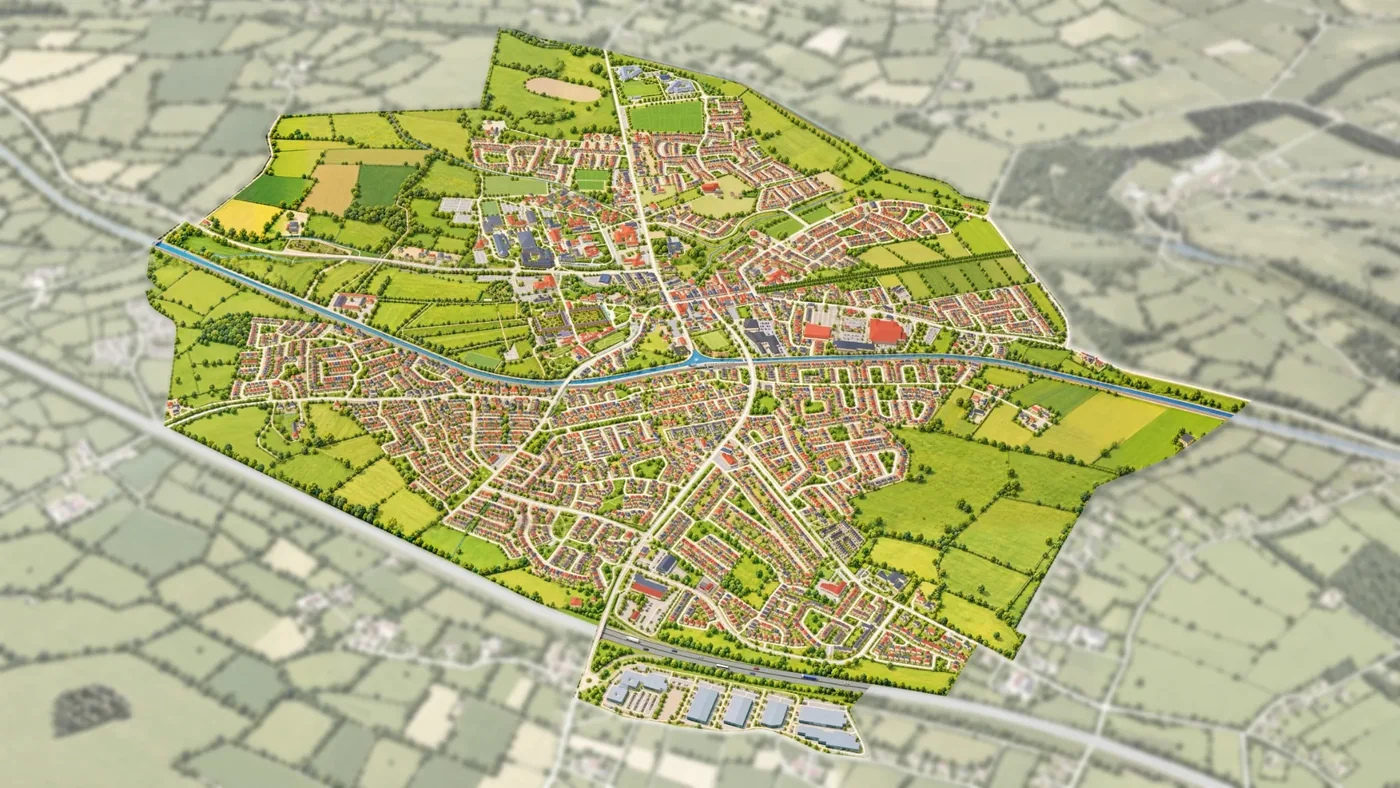 Check location ↗

Recognised with a Maynooth DZ Climate Champions Oak Award in 2026, it combines practical improvements with a Climate Action Roadmap that is updated annually and supported by sustainability reporting.
Estates and the Green Campus team help deliver this work. While Green Campus brings together people and community partners, the university’s institutional programme focuses on managing resources and reducing the environmental impact of a growing campus.
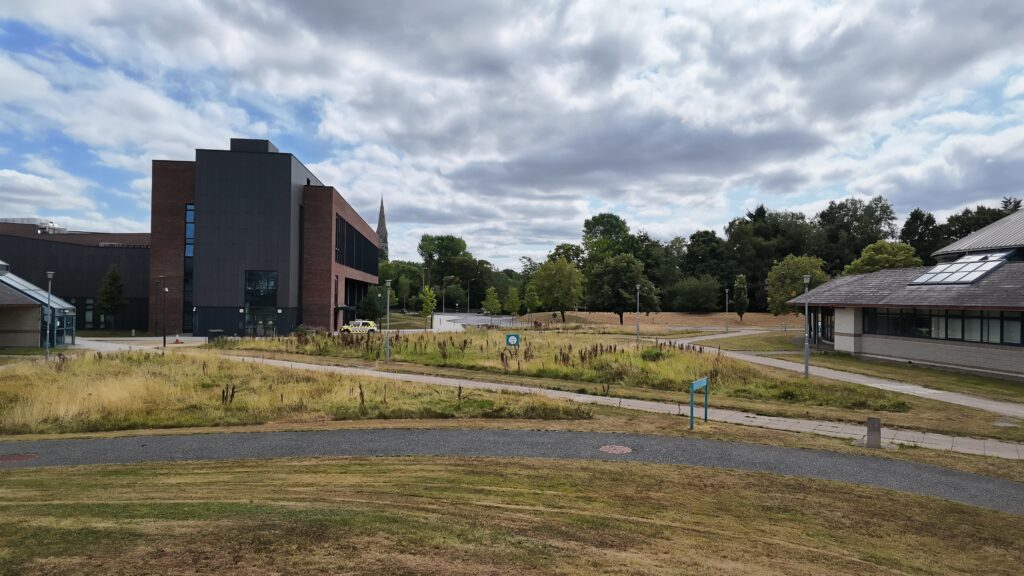
Improving buildings and reducing emissions
Solar panels generate electricity on several buildings, while solar thermal systems help provide hot water. Roof, wall and window upgrades improve insulation, alongside LED lighting, more efficient pumps and ventilation equipment, and better controls for building systems.
The university monitors emissions from its own operations and purchased energy. Provisional figures for 2025 show combined carbon dioxide emissions from these sources were 42.7% below the 2016–2018 baseline. Its target is a 51% reduction by 2030; assessment of wider supply-chain and other indirect emissions is not yet complete.
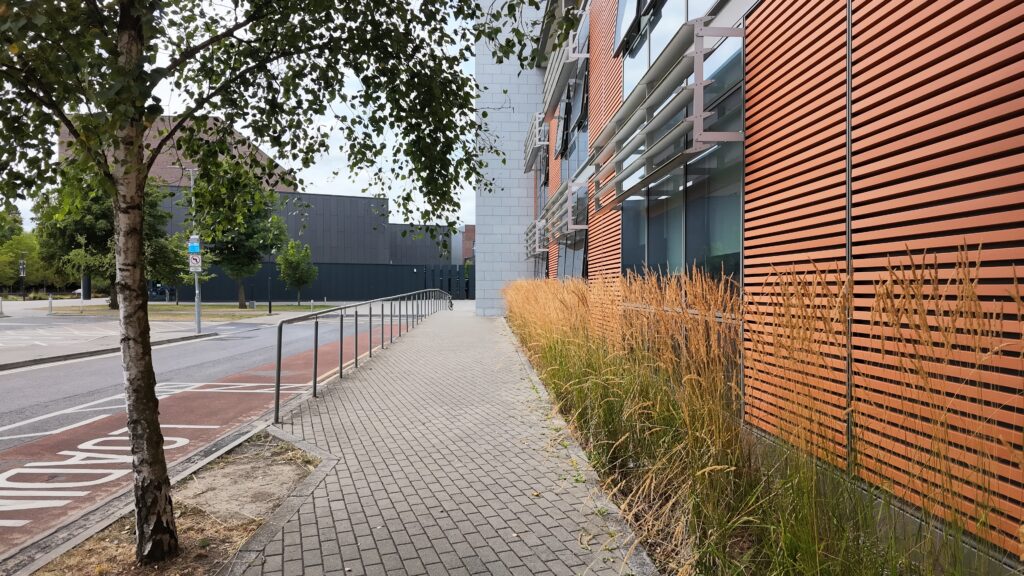
Conserving water across campus
Water monitoring helps identify leaks for prompt repair. Water-saving taps, showers and toilets, controlled flushing systems and rainwater collection for toilet flushing and irrigation also reduce demand.
Reported campus water use fell from approximately 170,000 cubic metres in 2016 to approximately 100,000 cubic metres in 2025, despite substantial growth in student numbers.
Supporting more sustainable travel
The university encourages walking, cycling, public transport and car sharing, and works with private bus operators to serve areas where students live. Additional on-campus accommodation included 116 beds added in 2025, giving more students the option to live where they study.
The campus goods-transport fleet is now electric, with the final diesel van replaced in 2025. Catering, security, cleaning and grounds suppliers also use electric vehicles on campus. The university has received the National Transport Authority’s Smarter Travel Mark.
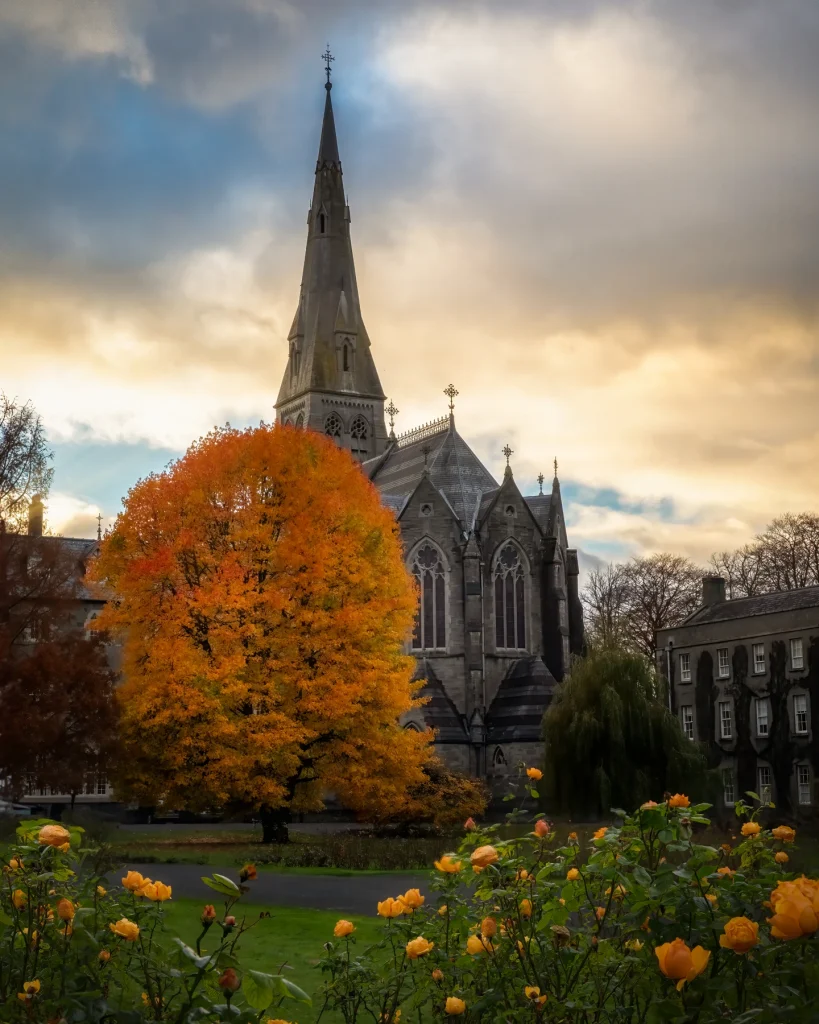
Managing grounds for wildlife
The Biodiversity Action Plan supports wildflower meadows, pollinator habitats, wildlife monitoring and public engagement. Around 31% of campus grass areas are managed for biodiversity, with recorded wildlife including birds, wildflowers, badgers and foxes.
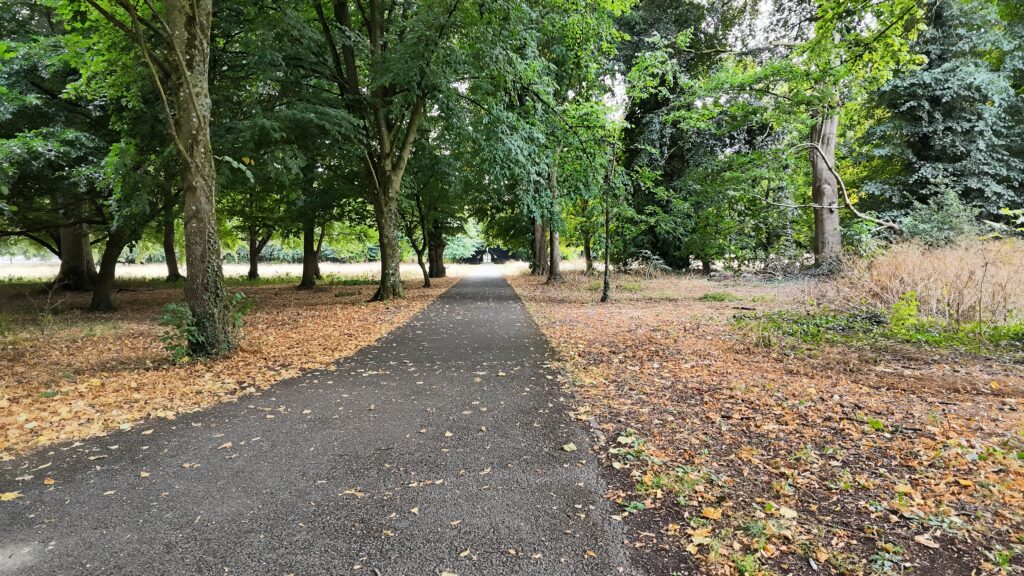
Qualified grounds staff and a professional tree specialist assess and care for campus trees. A policy of planting three native trees for every tree removed supports renewal of the tree population, with species chosen to suit each location.
Reusing resources and reducing waste
Staff seeking furniture are first directed to existing stock, while a residences reuse centre passes unwanted household items to incoming students. Leaves are turned into a growing material for planting, and chipped wood from tree works is reused as mulch. The Students’ Union collects bottles and cans through a return scheme that also raises funds for good causes.
The university separates nine waste streams and reports a 100% combined recycling and recovery rate in 2025, including material recovered after collection. This is not the same as saying all waste was recycled. Its measures include food-waste composting, electrical-equipment recycling and improved waste collection systems.
Making sustainability part of everyday decisions
Purchasing follows Green Public Procurement principles, using environmental criteria in tenders and contracts. Energy-efficient equipment and computers meeting recognised environmental standards are part of this approach.
The university shares learning through community and higher-education networks and reports progress to relevant public bodies. Its roadmap sets goals to 2030, while longer-term planning includes a net-zero ambition for 2050 and continued investment in a sustainable campus.
Want to learn more about the Maynooth DZ Climate Champions Awards?
You can visit the Maynooth DZ Climate Champions page to learn more.