

 Retrofit
Complete
The DemoHouse: Bringing Climate Action Home in Maynooth
Maynooth, County Kildare
A Maynooth Decarbonising Zone case study
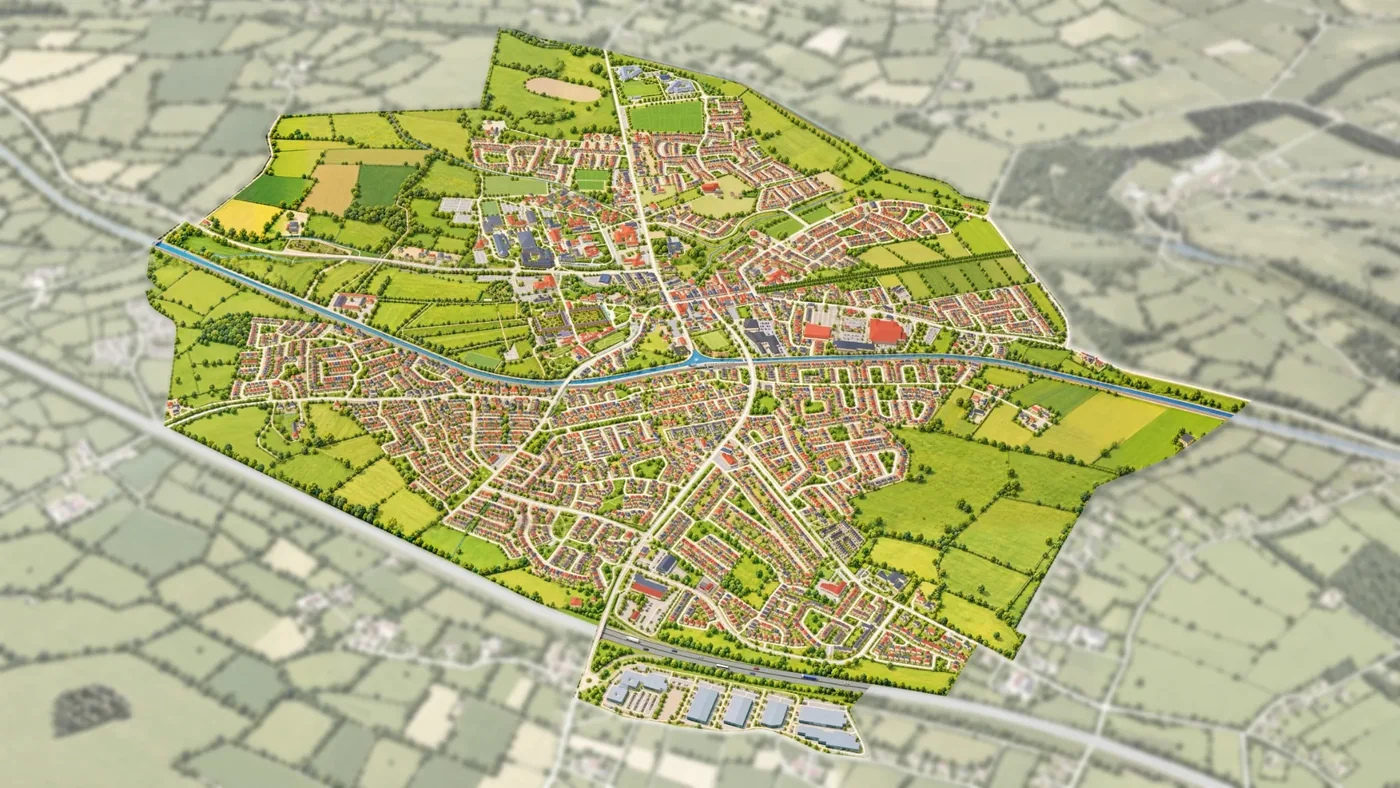 Check location ↗
Project snapshot
The DemoHouse was a Kildare County Council project in the Maynooth Decarbonising Zone. It transformed a former Council-owned social housing home from the 1990s into a practical public demonstration space where people could see, feel and understand home energy upgrades, retrofit, universal design, sustainability and biodiversity measures. It was open to the public between April 2025 and September 2026. During that time, the project received national recognition, winning the President’s Award as part of Entente Florale Europe in 2025, as well as the Energy in Buildings award at the SEAI Energy Awards in 2025. Now that its demonstration role has concluded, the home is returning to social housing stock, while the learning from the project will continue through the Maynooth DZ Information Hub.
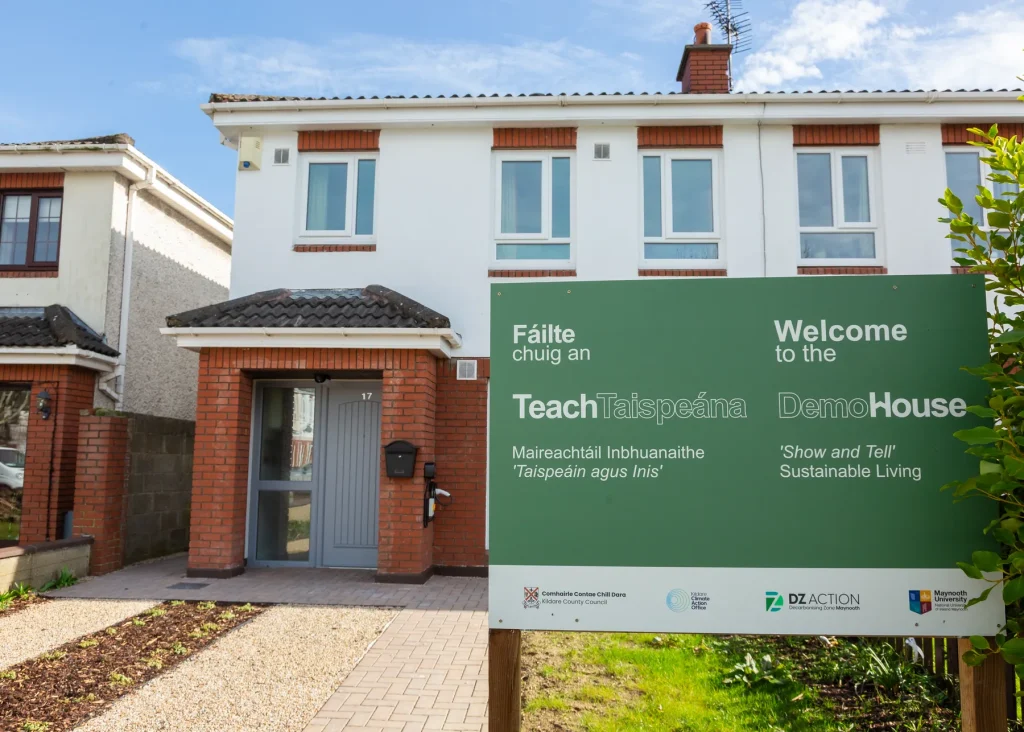
This case study is intended to help residents and community groups take the learning from the DemoHouse and apply it in their own homes, streets and local projects. It brings together the story, evidence and practical lessons from the demonstration period in one accessible place.
A house with a public purpose
In Maynooth, a familiar kind of home was given a new public purpose. The DemoHouse was created by Kildare County Council as part of the Maynooth Decarbonising Zone to show what climate action can look like in everyday domestic life. Instead of asking people to imagine retrofit from a brochure, the project opened the door to a real home where visitors could walk through upgraded rooms, see new technologies in place and understand how comfort, accessibility, lower emissions and biodiversity can come together.
During its demonstration period, the DemoHouse welcomed visitors, supported guided tours, hosted conversations and helped translate national climate targets into practical choices that householders could recognise.
The challenge: making retrofit feel possible
Residential emissions are a significant part of the Maynooth Decarbonising Zone story. Many people understand that homes need to become warmer, cleaner and more energy efficient, but the steps involved can feel technical, expensive or hard to picture. For some households, retrofit can seem like a distant policy ambition rather than something that could be planned, phased and delivered in a real home.
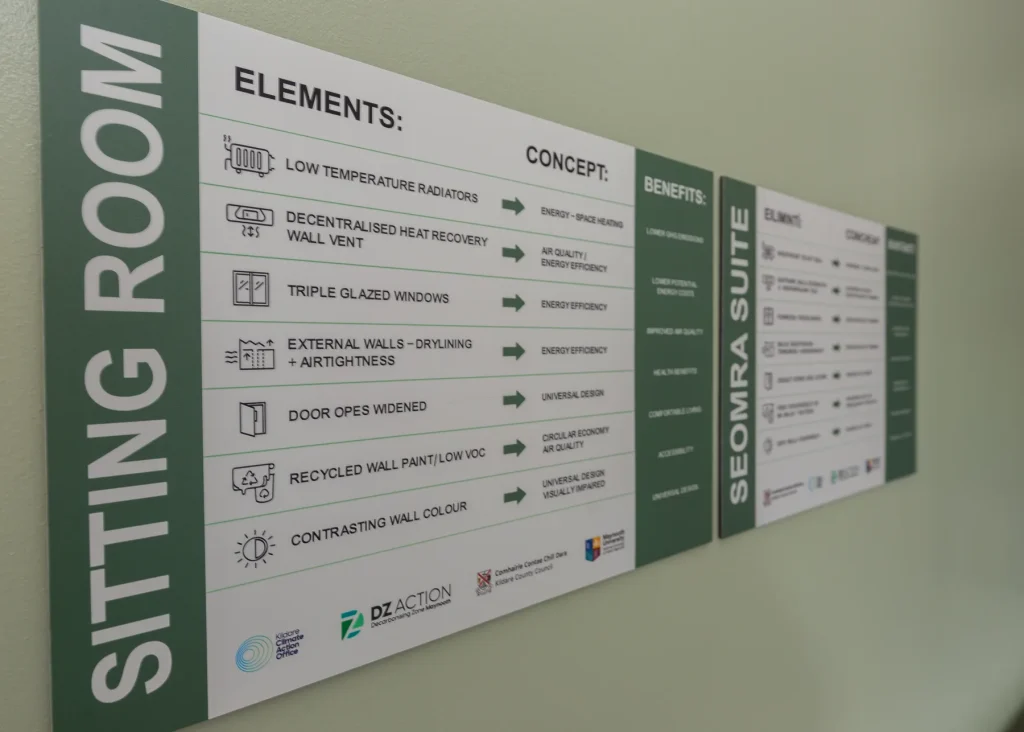
The DemoHouse responded to that challenge by making retrofit practical and tangible. Visitors could explore insulation, triple glazing, ventilation, renewable energy, water-saving features, accessible design and biodiversity measures working together in one place. It helped people move from asking “what does this mean?” to asking “what could this look like in my own home?”
What changed in the house
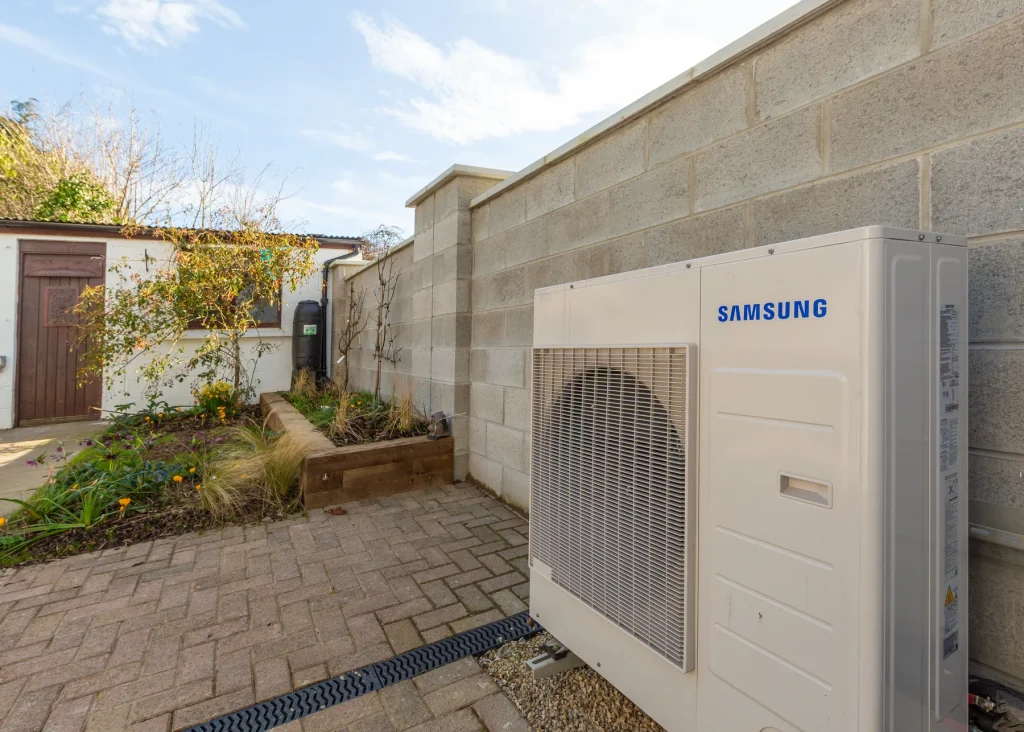
The project transformed a 1990s Council-owned home into a living example of good retrofit practice. The oil central heating system and open fire were replaced with an air-to-water heat pump. Fabric upgrades included internal wall insulation, improved attic insulation and the replacement of double-glazed windows with triple glazing. Airtightness works helped reduce unwanted heat loss, while ventilation improvements supported a healthier indoor environment.
The results were significant. The home improved from a BER D1 rating to a BER A1 rating, with primary energy performance improving from 241.56 kWh/m²/yr to 20.83 kWh/m²/yr. The carbon emissions indicator also fell from 57.32 kgCO₂/m²/yr to 2.67 kgCO₂/m²/yr. These figures gave the project a clear evidence base and showed visitors that deep retrofit can deliver a major change in building performance.
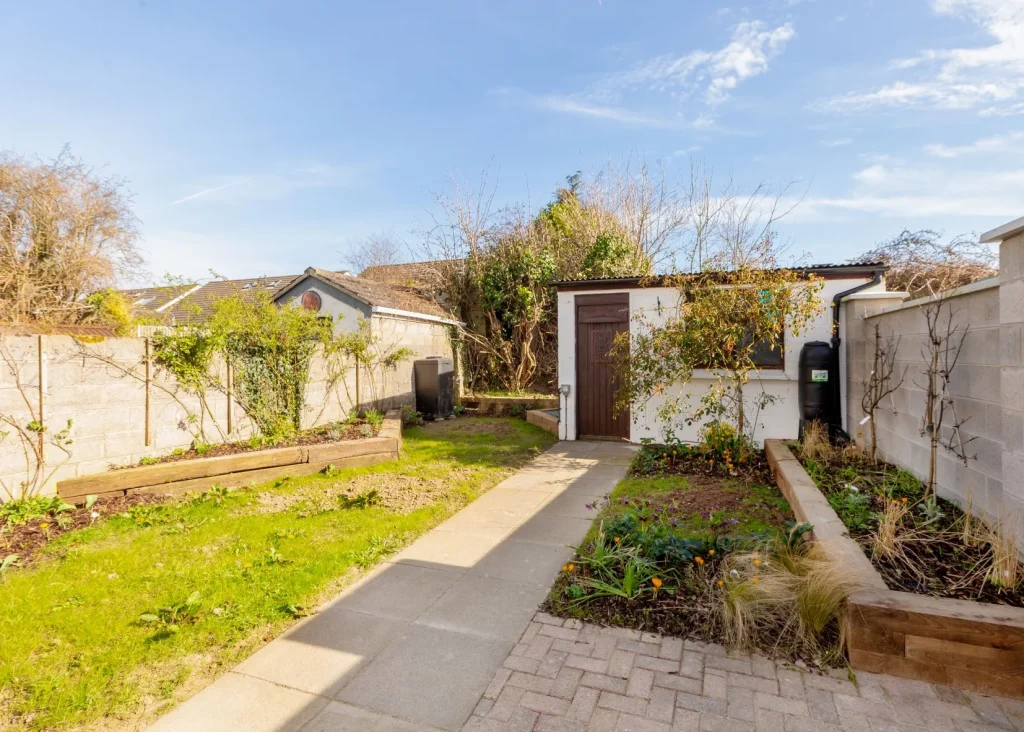
Just as importantly, the house was not presented only as an energy project. It also demonstrated universal design and lifetime home principles, with features to support comfort, accessibility and day-to-day usability for people at different stages of life. The garden and outdoor areas showed how biodiversity planting, rainwater management and nature-based solutions can form part of a more climate-resilient home.
A community learning space
During its time as a public demonstration house, the DemoHouse became a place for conversation as much as information. Guided tours gave local people the chance to ask questions, compare options and better understand what different measures might mean in practice. Members of the Maynooth Sustainable Energy Community and Kildare County Council’s Climate Action team helped make the experience practical and approachable.
The project also reached people beyond those who could visit in person. A virtual tour, short animated explainers and filmed community reactions helped share the story more widely. Local voices — including people connected with sport, care, business and community life — helped show that retrofit is not only a technical subject, but something connected to comfort, independence, health, affordability, sustainability and pride of place.
Explore the completed DemoHouse through the 360 virtual tour.
Why it worked
The success of the DemoHouse came from its ability to join technical performance with human experience. It was not a sealed-off pilot or a specialist-only project. It was a relatable home, in a familiar town, opened for a defined period so that people could learn from it directly.
It also worked because it brought different kinds of expertise together. Kildare County Council departments supported the retrofit and universal design elements. Maynooth University contributed research and monitoring expertise, including projects examining energy consumption and indoor air quality in a retrofitted home. The Maynooth Sustainable Energy Community helped connect the project to local householders. Together, these partnerships turned the building into a living lab, an in-situ communication and education tool, a public engagement space and a community resource.
Key results: The DemoHouse helped turn retrofit from an abstract idea into something people could see and understand. It showed how a typical 1990s home could become warmer, more efficient, lower carbon, more accessible and more climate resilient — improving from BER D1 to BER A1 while also demonstrating practical measures such as insulation, triple glazing, low-carbon heating, solar PV, ventilation, universal design, rainwater management and biodiversity planting.
Impact and legacy
The DemoHouse achieved its goal by building confidence around home retrofit. It gave people a grounded and memorable way to understand the choices involved, the questions to ask and the kinds of supports and conversations that can help move a household from interest to action.
As the home returns to social housing use, its public demonstration role has come to a close. That closure is also part of the project’s success: the house was used for a clear community learning purpose and will now return to its original social purpose. During its demonstration period, it supported learning for the wider public and for social housing tenants, while also offering a practical example that could inform similar retrofit initiatives in other local authority settings. The Maynooth DZ Information Hub will carry the story forward by making the learning, videos, data and practical messages available to a wider audience over time.
What others can learn
-
Use real places to explain big ideas. The DemoHouse made climate action easier to understand by locating it in an ordinary home rather than an abstract policy setting.
-
Show the whole picture. Energy efficiency, accessibility, biodiversity, water management and sustainable transport were presented together, reflecting the way people experience their homes in real life.
-
Make learning social. Tours, videos and local voices helped turn technical information into conversation and confidence.
-
Plan for legacy. A demonstration project does not need to remain open forever to keep creating value. Its learning can continue through digital resources, case studies and community platforms.
Looking ahead
The Maynooth DZ Information Hub will build on the DemoHouse by keeping its story accessible after the doors have closed to the public. It can help residents, community groups, schools, local organisations and other local authorities learn from what was demonstrated in Maynooth and apply those lessons in their own settings. It also creates an opportunity to carry forward the DemoHouse’s climate education value through digital resources, local learning materials and future community engagement.
The DemoHouse showed that climate action becomes more meaningful when people can encounter it through everyday places and practical examples. Its next chapter is not about one house remaining open, but about the knowledge from that house travelling further — into homes, conversations and community action across the Maynooth Decarbonising Zone.